Why a barbell plate calculator changes how you train
2026-04-21
A barbell plate calculator does one thing: it tells you exactly which plates to load, per side, without the arithmetic. Every barbell lifter has stood at the rack doing that math. Your working weight is 102.5 kg, the bar is 20 kg, so you need 82.5 kg distributed across both sides, which is 41.25 kg per side, which is one 25, one 15, one 1.25... do you even have 1.25 kg plates here?
It's annoying. It's also wrong more often than people admit. Misloading a bar before a PR attempt is a real way to fail a lift you were capable of making.
What a plate calculator actually does
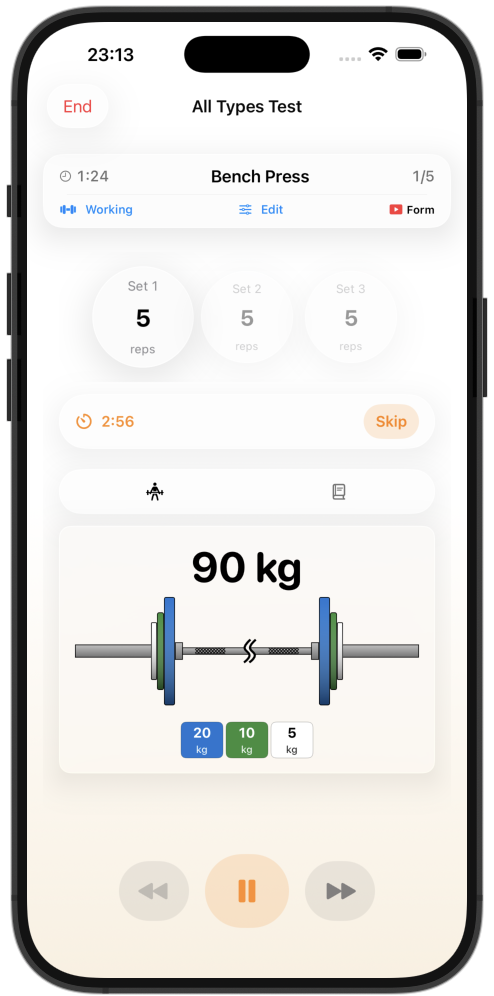
A plate calculator takes your target weight, subtracts the bar, divides by two, and figures out the most efficient plate combination per side. The "plates you actually own" part is what makes it useful. A generic calculator that assumes you have every denomination in stock is useless if your gym only has 2.5 and 5 kg small plates.
In AddFive, you configure your plate inventory in Settings or directly from the workout player. Every barbell exercise then shows you exactly which plates to load per side, in order from heaviest to lightest. If you train at more than one gym with different equipment, the pro version lets you set a separate inventory per gym so the calculator always reflects what's actually on the rack in front of you.
Warmup sets and warmup formulas
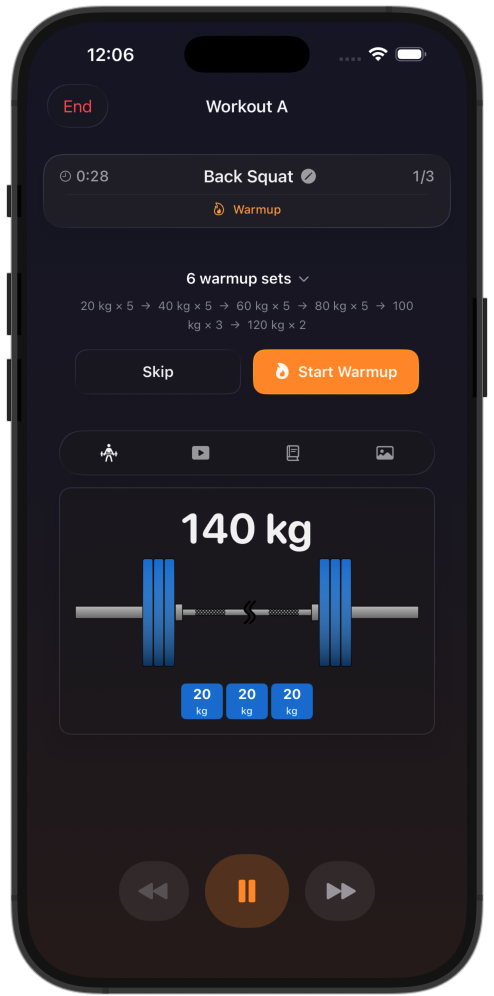
The calculator also generates warmup ramps. Jumping straight to your working weight is a reliable way to underperform or get hurt.
A standard ramp runs something like: empty bar, then 40%, 60%, 80% of your working weight, then the work set. AddFive calculates this automatically and shows the plate configuration for each step.
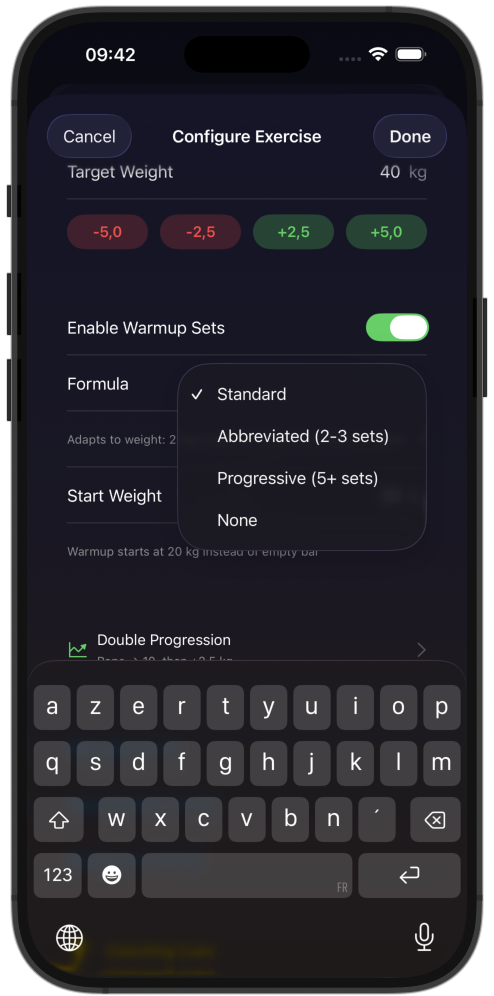
Four warmup formulas are available per exercise: Standard (the default ramp), Abbreviated for shorter sessions when you just need 2-3 sets to get there, Progressive for longer ramps with 5+ sets under heavier or technical lifts, and None if you handle warmup yourself. The formula and number of warmup sets are configurable per exercise.
Why this matters more than it sounds
Warmup sets get skipped more than they should, usually because figuring out the plate math mid-session is annoying. When the sequence is already laid out, you actually do them.
The warmup isn't just injury prevention. It's technique practice under progressively heavier load. The reps you take at 60% are where your body rehearses the movement pattern before it counts. Skipping them means your first heavy set is also your first rep of the day at that range of motion.
If you've ever had a squat feel wrong and later realized you went straight to your working weight, that's the problem.
---
Related: what is progressive overload explains why each of those warmup reps is actually practice under load, not just injury prevention. How deloads work covers what to do when the working weight itself needs a reset.